You love the idea of sleeping under the stars, but not the damp tent, the thin sleeping bag or the trek to a shared bathroom in the middle of the night. That’s exactly the problem glamping solves. Short for “glamorous camping,” glamping pairs the outdoor setting you crave with real beds, proper heating and often a private bathroom, all inside structures like safari tents, yurts, domes and treehouses.
This beginner’s guide walks you through everything you need to plan your first trip: what glamping actually is, what a stay includes (and what it doesn’t), typical nightly rates, when and how far ahead to book, how to choose a destination, and what to pack. Many sites sit within an easy drive of major cities, so your first taste of luxury camping may be closer than you think. Let’s get started.
What Is Glamping, Exactly?
Glamping is short for “glamorous camping,” and the name says it well. Instead of sleeping on a thin mat on the ground, you get a real bed with proper linens, lighting, electricity, and usually heating or cooling. Many glamping setups also include a private bathroom, so you can enjoy the outdoors without giving up the comforts of a hotel room.
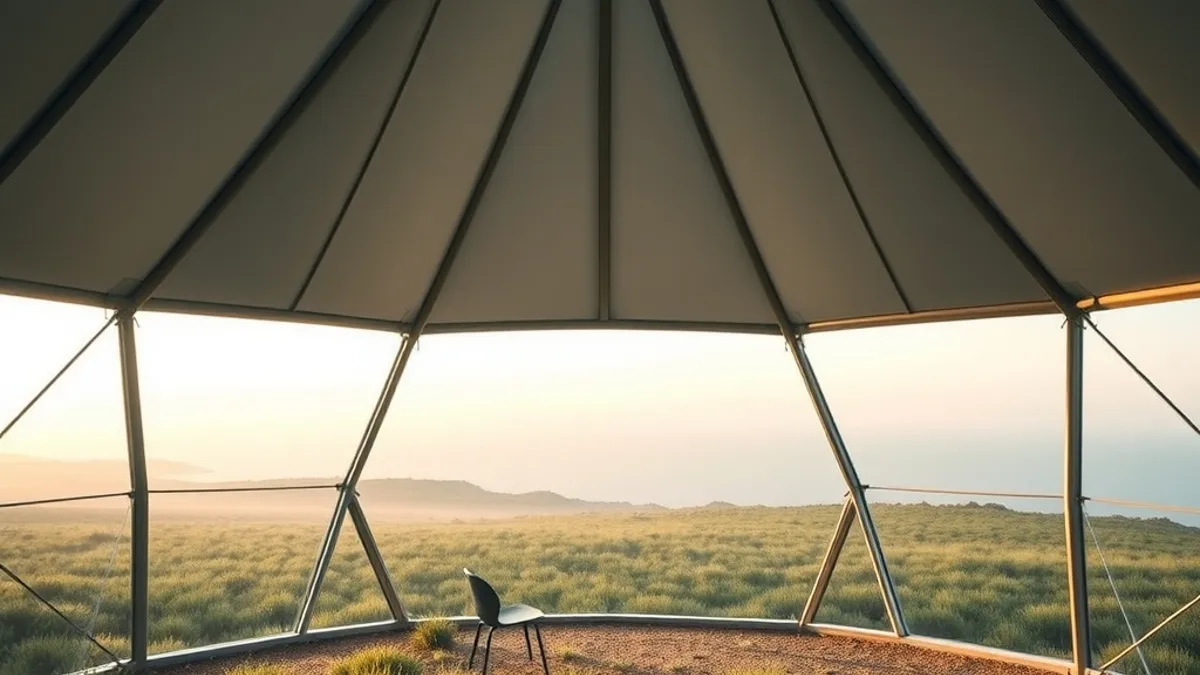
The structures themselves are part of the appeal. You might stay in a spacious safari tent, a round canvas yurt, a geodesic dome with panoramic windows, a wooden A-frame, a treehouse perched among the branches, or a small purpose-built cabin. Each one puts you closer to nature than a standard hotel ever could, while still giving you solid walls or weatherproof fabric, a roof, and a lockable door.
What makes it different from regular camping?
The biggest difference is that everything is set up for you before you arrive. The beds are made, the space is heated or cooled, and there is nothing to pitch, inflate, or assemble. At many sites, meals are prepared for you too, whether that is a breakfast basket delivered to your door or an on-site restaurant. You simply show up, unpack a small bag, and start enjoying your surroundings.
In short, glamping keeps the best parts of camping, like fresh air, starry skies, and quiet mornings in nature, while removing the parts that put people off, such as sleeping on the ground and hauling heavy gear. It is camping with the hard work done for you.
What You Get (and Don’t Get) in a Glamping Stay
The biggest difference between a tent you pitch yourself and a glamping stay is what’s already waiting for you. Walk in and you’ll usually find a proper queen or king bed, made up with real linens, plus lighting so you’re not fumbling with a headlamp at night. Most structures include some form of heat, often a wood stove, which makes a huge difference once temperatures drop after sunset.
Many sites go well beyond the basics. A private deck with chairs is nearly standard, and at the upper end you might have your own bathroom, an outdoor soak tub, or even a small plunge pool. That said, the range is wide: a safari tent at a simple site can feel closer to camping than a hotel, so it pays to know exactly what your money buys.
Trade-offs are real. Walls in tents and yurts are thin, so you’ll hear wind, rain, and your neighbors. Kitchens are often limited to a shared cooking area or nothing at all. And since you’re staying in a natural setting, expect visits from insects, birds, and the occasional curious raccoon.
- En-suite or shared bathrooms: simpler sites often rely on a shared ablution block a short walk away, while domes and cabins more commonly include a private bathroom, sometimes with a composting toilet or outdoor shower rather than a standard one.
- Cooking rules: some sites prohibit open flames or any cooking inside tents for safety, so ask whether there’s a communal kitchen, a fire pit for grilling, or whether you’ll need to plan on nearby restaurants.
- Power and hot water: a few remote sites run on solar with limited outlets, so confirm whether hair dryers, kettles, and long hot showers are realistic.
- Wildlife precautions: ask if food must be stored in a provided locker or your car, since leaving snacks out can attract animals right to your deck.
Before you book, send the site a short message asking two questions: are the bathrooms en-suite or shared, and is cooking allowed on site? The answers will tell you more about the experience than the photos do.
How Much Glamping Costs per Night
Glamping sits comfortably between a hotel room and a tent site on price. For most sites, expect to pay roughly $100–$500 per night depending on the structure, location and season. A simple yurt or A-frame in a quiet spot usually lands at the lower end of that range, while a large safari-style tent with a private bathroom, deck and full-service extras can exceed $800 per night at high-end properties.
Why the same site can cost very different amounts
Season is the biggest factor. Shoulder-season stays in May or September–October often run 20–40% cheaper than peak summer, and you still get pleasant weather at most destinations. If your dates are flexible, shifting a weekend trip by a few weeks can easily save you the cost of an extra night.
Structure matters too. A dome or treehouse with a private bathroom commands a premium over a canvas tent with shared facilities, so decide early which comforts you actually need for your first trip.
Watch out for minimum-stay rules
Many glamping sites require a 2-night minimum stay on weekends. That changes the math on a short break: a site advertising $180 per night may really cost you $360 plus fees if you can only book two nights. If you want a one-night escape, midweek dates are usually easier to arrange and often cheaper.
Always check the total before booking, since cleaning fees, extra-guest charges and pet fees can add up. Rates and minimums vary by property, so compare a few sites in your chosen area rather than assuming the first price you see is typical.
When and How Far Ahead to Book
Glamping sites are often small, with only a handful of tents or domes on the whole property, so popular dates can sell out long before a regular hotel would even think about occupancy. A site with eight units loses just a few bookings before a summer weekend is gone. Planning your booking window matters more here than it does for most trips, and the difference between booking at the right time and the wrong time is often the difference between a deck-facing dome and the last remaining tent next to the parking area. Here’s a simple way to get it right.
- Book 3–6 months ahead for summer stays. The June–August season is the busiest at most sites, especially weekends. Reserving in that window gives you real choice over structure type and layout instead of whatever is left.
- Allow 6–12 months for peak holidays. Long weekends and holiday periods fill fastest, and the best units often go first. If you have your heart set on a specific site or a special occasion, book as early as the calendar allows.
- Read the cancellation terms before you pay. Most sites enforce a cancellation window of somewhere between 7 and 30 days before arrival. Check exactly when your deposit becomes non-refundable and whether weather-related cancellations are handled differently.
- Try midweek dates in shoulder season for late plans. Stays in May or September–October, especially Sunday through Thursday nights, are typically the easiest to secure on short notice. They also tend to cost less, so a spontaneous trip can work out cheaper than a planned one.
One more practical tip: put a reminder in your calendar for the cancellation deadline the moment you book. Plans change, and knowing your exact window lets you adjust without losing money. If your dates are flexible, ask the site directly which weeks still have openings, since small operators are often happy to point you toward quieter periods. It also helps to follow your favorite sites on social media or join their mailing list, because last-minute cancellations are sometimes offered as discounted dates before they disappear. And if the site you want is full, ask to be placed on a waitlist — with so few units per property, one canceled booking can free up exactly the dates you wanted.
Choosing Your First Glamping Destination
Picking the right destination matters more than picking the fanciest tent. For your first glamping trip, look for sites within a 1–3 hours’ drive of a major city. A short drive keeps the trip low-risk: if the weather turns or the setup isn’t for you, home is never far away. Many glamping sites sit in exactly this range, so you should have plenty of options without committing to a long road trip.
Match the setting to the season
Think about when you want to travel, then choose a structure that suits it. Alpine domes and forest cabins shine in the colder months, when a wood stove and snow-covered views make the whole experience feel special — a stay in the German Alps, for example, pairs beautifully with forest homes with alpine calm and soft morning light. Safari tents and coastal sites, on the other hand, are usually at their best in the warm months, when you can actually enjoy that outdoor deck.
Season also changes what you should check before booking. A dome that feels cozy in July can be a different story in January, so read reviews from guests who stayed in similar conditions to yours.
Read recent reviews with a critical eye
Reviews tell you how a site performs when things go wrong, not just when the sun shines. Look for recent comments that mention three things specifically: weather resilience, heating quality, and how the site handles rain. Did the tent leak in a downpour? Did the heater keep up on a cold night? Was the path to the bathroom a mud bath after wet weather? Honest answers to these questions will tell you far more about your upcoming stay than glossy photos ever will.
What to Pack for a Glamping Trip
Packing for a glamping trip is closer to packing for a cozy cabin weekend than a backcountry expedition. You won’t need to haul sleeping bags, camp stoves or coolers, since your accommodation already comes with a proper bed, linens and usually some form of heating. That said, the outdoors is still the outdoors, and a few thoughtful items make a big difference to your comfort.
The number one mistake first-timers make is underestimating how cold it gets at night. Tent-style structures, even heated ones, lose warmth quickly once the sun goes down, and canvas walls offer little insulation compared to a hotel room. Pack warm layers you can add and remove easily, plus a proper jacket for sitting around the fire after dark. This applies even in summer, when evening temperatures can drop far below daytime highs.
Also think about light and power. Many glamping sites are deliberately off-grid or semi-rural, so paths between your tent and the bathroom can be dark and uneven, and outlets may be limited to a single socket or none at all in the room.
- Slip-on shoes or sandals: you’ll be stepping in and out of your tent, deck or shared bathroom multiple times a day, often at night, so avoid fussy laces.
- A torch or headlamp: site lighting is often low and atmospheric rather than practical, so keep one by your bed for midnight trips.
- A power bank: useful if your unit has limited or no outlets, especially for keeping your phone alive for maps and bookings.
- Bug spray: canvas structures sit close to nature, and mosquito activity near water, meadows or woodland is common in warm months.
- A reusable water bottle: many sites draw from tank or well water, so having a bottle on hand saves repeated trips to a tap.
Your First Glamping Trip, Simplified
Glamping solves the exact problem that keeps many of us from camping: you get to sleep under the stars without a damp tent, a thin sleeping bag or a walk to a shared bathroom in the dark. Instead, you arrive to a real bed, heating and everything already set up, so the trip feels like a getaway rather than an endurance test.
Keep the planning simple. Budget around $100–$500 per night, book 3–6 months ahead if you want summer dates, and consider shoulder season for better value. For your first trip, stay within easy driving distance, confirm the bathroom and heating details before paying, and pack layers for cool evenings. If that sounds like your kind of night outdoors, leave a comment or share this article with someone who needs a nudge.