Glamping is booked year-round, but picking the wrong month can mean rain, crowds or peak prices. The best seasons for glamping depend on where you are going and what kind of trip you want: a heated dome in the Alps works in a completely different window than a safari tent in Southeast Asia. This month-by-month planning guide breaks down the calendar so you can match your dates to the right destination, from spring escapes to winter cabins.
Over the next sections, we cover why timing shifts by destination, then walk through each season in turn: spring from March to May, summer from June to August, autumn from September to November, and winter glamping from December to March. We also look at tropical and Southern Hemisphere timing, where dry and rainy seasons matter more than the calendar year. Along the way, you will find practical notes on when rates drop, when to book, and how to match your dates to the right glamping trip.
Why the Best Seasons for Glamping Depend on Your Destination
Glamping puts you closer to the weather than almost any other type of accommodation. A hotel room has thick walls, climate control and a roof that never flexes in the wind. A tent, dome or safari-style lodge does not. Even the best-built units offer far less insulation than a conventional room, so a cold snap, a humid night or a heavy downpour shapes your experience in a way it never would in a hotel. That is why choosing the right season matters more for glamping than for almost any other trip.
The catch is that there is no single best month. The same calendar date can mean opposite things depending on where you pitch. July is peak season across Europe and North America, with warm nights and every facility open, while in tropical Asia those same months often fall inside the monsoon, when tented stays turn muddy and humid. A dome that is magical in the Alps in February would be a poor choice in a lowland desert, where you want the cooler months instead.
Start with your priority, not the calendar
Before you look at dates, decide what you actually want from the trip. Is it warmth and sunshine? Snow on the canvas? Lush green landscapes? Or simply the lowest price for a comfortable stay? Each priority points to a different season and a different region, and the rest of this guide walks through them month by month.
Once you know your priority, the timing usually becomes obvious. Warmth seekers should follow the dry season in tropical destinations or the cooler months in desert regions. Snow lovers need the winter window in alpine areas. Value hunters do best in shoulder seasons, when rates typically drop well below peak prices. Match the season to the goal first, then narrow down the destination — not the other way around.
Spring Glamping: March to May
Spring is a season of contrasts for glamping, and the smartest travelers split it in two. March and April are prime months for desert and lowland sites, when daytime temperatures stay comfortable and nights are cool but manageable. Ghardaïa in Algeria’s M’zab Valley is a good example: a tented stay here feels pleasant in early spring, long before the summer heat that makes desert glamping impractical. The same logic applies to other arid regions — go early, before the thermometer climbs.
May is where the season really opens up. European countryside and wine regions hit their stride, with vines in fresh leaf, wildflowers everywhere, and noticeably fewer crowds than the summer rush. Because May falls within the shoulder season, rates are typically 20-40% lower than peak, and booking one to two months ahead is usually enough for a good pick. If vineyard views and long evenings appeal to you, it’s worth looking further afield too — the high-altitude wine country around Salta in Argentina offers wine retreats with highland views and long golden afternoons that pair beautifully with a spring itinerary.
Alpine glamping is the exception. Many mountain sites only open from late May, once the snow has cleared enough to make access roads and tented platforms usable. Don’t assume a dome advertised as year-round is bookable in April — check the site’s actual opening date.
- Pack for temperature swings, not just warmth. Even in mild months, desert and lowland sites like Ghardaïa can drop sharply after sunset, so layers and a site with heating or proper bedding matter.
- May is ideal for cycling and walking-based glamping stays. Trails in European wine regions are green and quiet, and many sites rent bikes or run vineyard tours before the summer crowds arrive.
- Ask about mud and meltwater at alpine sites. Just after a late-May opening, some high-altitude locations still have soggy ground or partially snow-covered paths, so confirm what facilities are actually running.
- Shoulder-season availability is flexible, but not unlimited. Popular countryside sites can still fill up on long weekends and local holidays, so lock in dates early if your trip centers on one.
Summer Glamping: June to August
Summer is when glamping hits full stride across Europe and North America. From June to August, nights stay warm enough that you rarely need more than a light layer, and sites operate at their fullest: pools, restaurants, kayak rentals, kids’ clubs and organized activities are all running. If you want the classic glamping experience with everything switched on, this is it.
The trade-off is demand. This is peak season, so expect the highest rates of the year and the busiest common areas. For popular sites — lakeside safaris tents, coastal domes, vineyard lodges — book 3-6 months ahead or you may find only midweek slots left. If your dates are flexible, early June and late August often feel like summer without the heaviest crowds.
Where summer glamping really shines
Coastal and island destinations come into their own. The Adriatic coast fills with seafront tented sites where you can swim before breakfast, while Greek and Croatian islands combine warm water with breezy evenings that keep canvas tents comfortable. Prices and availability vary widely, so compare a few operators before committing.
Further north, the light is the draw. Scandinavian archipelagos enjoy long, bright summer evenings, and coastal stays in western Sweden are a lovely example — this Bohuslän sea house guide captures that quiet coastal balance well. Pack an eye mask; the midnight sun takes some adjusting to.
Autumn Glamping: September to November
September might be the smartest month in the glamping calendar. Across the Northern Hemisphere, days stay warm and nights are still comfortable in a tent or dome, yet the summer crowds have gone back to work and school. Because it falls in the shoulder season, many sites drop their rates noticeably below peak prices, so you often get the same lakeside pitch or safari-style tent for a friendlier sum.
October is the month for foliage. Forest clearings, valley meadows and lakeside sites in Central Europe put on a color show that no summer stay can match, and crisp evenings make the wood stove or fire pit feel like part of the experience rather than a backup plan. Pack layers — mornings can be damp with dew or light fog.
By November, the smart money moves elsewhere. Desert destinations enter their best stretch, with pleasant daytime temperatures after months of punishing heat, while tropical regions begin shaking off the rains as their dry season gets underway. If you want warmth without the peak-season price tag, this is the month to look south.
- Book 1-2 months ahead: shoulder-season demand is lower, so you rarely need the long lead time that summer sites require.
- Ask about heating before you book: September nights can drop sharply at altitude, and some sites switch heating on only later in autumn.
- Check shorter operating calendars: some forest and lakeside sites reduce their facilities or close entirely once October ends, so confirm what stays open.
- Watch for early sunsets in October: plan hikes and paddles for the morning so you are back at camp with daylight to spare.
Winter Glamping: December to March
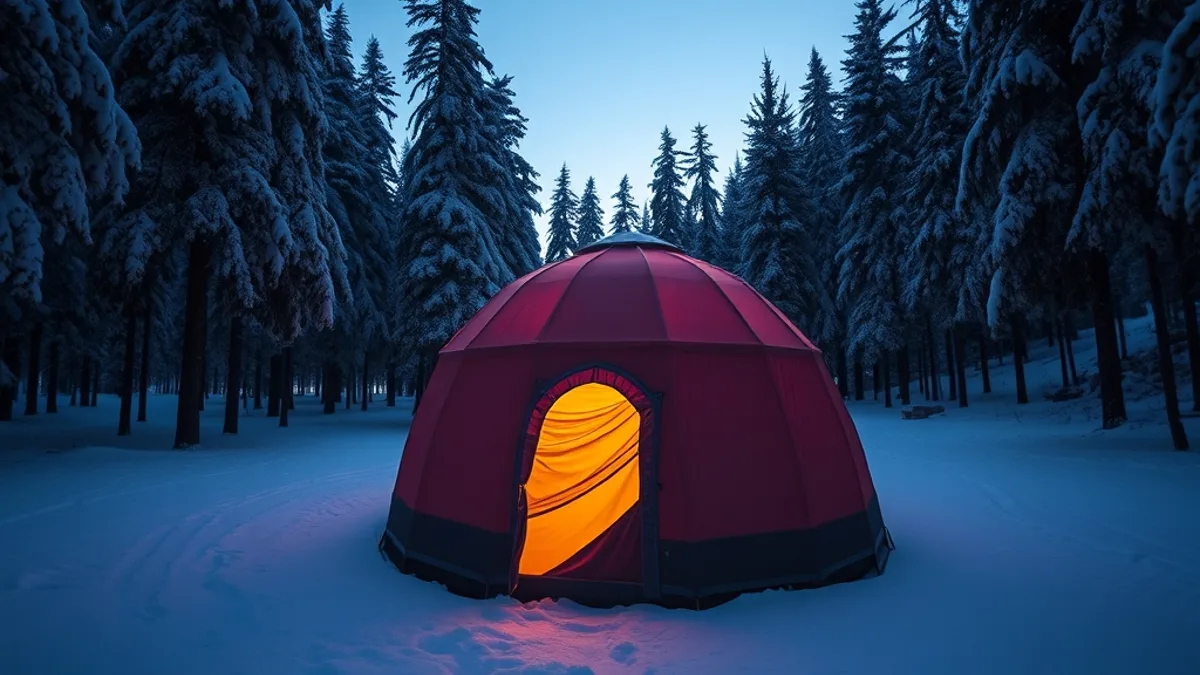
Winter glamping, from December to March, trades leafy canopies for snow-covered landscapes and the quiet that only the cold season brings. This is the time for heated domes and cabins in alpine regions, where thick insulation, wood stoves and underfloor heating make a transparent roof over a frozen valley genuinely cozy rather than a test of endurance. Expect frosted treetops at sunrise, short but luminous days, and the kind of silence you rarely find in summer.
Snow, slopes and slow wellness
Winter sites work beautifully alongside ski areas. Many domes and cabins sit close enough to lifts for a few runs in the morning and a soak in a hot tub by afternoon. If skiing isn’t your thing, wellness-focused retreats dominate this season — think saunas, heated pools and long dinners after a day of snowshoeing. For a gentle introduction to snow-season glamping, the snow retreats around Bukovel combine winter comfort with easy access to the slopes, and similar setups exist across other alpine regions in Europe and North America.
Practical tips matter more in winter than any other season. Confirm exactly how each unit is heated — a wood stove that burns out overnight is different from continuous heating — and check access roads, since some sites become hard to reach after heavy snowfall. Pack layers and traction-friendly footwear, and remember that holiday weeks around Christmas and New Year book out early, often well within the standard 3-6 month peak booking window.
The counter-season escape
If snow isn’t appealing, flip the hemisphere. Winter is dry season in tropical destinations like Southeast Asia and on many island retreats, which means calm conditions for tented villas, overwater-style platforms and beachside lodges. It’s the smart way to keep glamping through the cold months — just confirm each property handles humidity and rain showers well, even in the dry season.
Tropical and Southern Hemisphere Timing
Flipping the calendar for the tropics and beyond
When you head south of the equator or toward the tropics, the European calendar stops working. Tropical Asia’s dry season runs from November to April, which is exactly when tented camps across Thailand, Vietnam, Bali and Sri Lanka are at their best. During these months you get warm, mostly rain-free days, cooler evenings and trails that are actually walkable. If your dream stay is a canvas tent on stilts over the water or a jungle lodge with an open-air bathroom, book within this window.
The June to October monsoon is the period to avoid for tented stays in tropical Asia. Rain in the tropics rarely drizzles — it pours, often for hours at a time. Dirt paths turn to mud, some remote camps close entirely, and humidity soars to the point where even a well-ventilated safari-style tent feels damp. A few operators stay open year-round with discounted rates, but check carefully what “open” means: some facilities, like outdoor dining areas or boat transfers, may be limited during heavy rain.
Southern Hemisphere summer and island timing
For destinations like Australia, New Zealand, South Africa and parts of South America, simply flip the Northern Hemisphere calendar. Their summer runs from December to February, making it the prime season for coastal glamping, vineyard stays and outback domes. Their winter, June to August, is milder in much of the region, so shoulder-season trips can still be comfortable — though mountain areas in New Zealand can be genuinely cold.
Island destinations deserve a special mention because dry-season visits reward you twice over. Calm seas mean smooth boat transfers, swimmable water and snorkeling with real visibility, while the clearer light between rain fronts is a gift for anyone traveling with a camera. Whether you’re looking at the Maldives, the Philippines or the islands of the Caribbean, aim for the drier months and check local conditions with your operator before locking in dates, as microclimates can shift the picture from one island to the next.
Matching Your Dates to the Right Glamping Trip
The right month makes or breaks a glamping trip. If you want the best value, aim for the shoulder seasons of May and September, when rates run 20-40% below peak and the weather stays mild. Summer, from June to August, is the pick for social travelers who want lively sites and full facilities, while winter works for two very different trips: cozy snow-side stays in mountain destinations, or tropical escapes in Southeast Asia during the dry season.
Timing your booking matters just as much. Reserve popular sites 3-6 months ahead for peak season, while 1-2 months is usually enough for shoulder-season stays. Before you commit, always check a site’s seasonal opening dates and whether it has proper heating or cooling for the month you plan to visit. Found your perfect window? Share this article or drop a comment with your own glamping plans.